3 Things that Enhance Audience Engagement in a Presentation

body language

presentation

presentation tips

Rick Enrico

SlideGenius

Attracting the audience’s attention can be tricky, especially if you’re a first-time presenter. Not knowing the right way to engage listeners and pique their attention due to a lack of experience can bore the crowd and make them anxious. But play the right cards and you’ll find that there are a number of ways to keep people engaged. One of the easiest is to interact with your audience.We don’t just mean getting to know your listeners before the presentation, although that can give you an idea of how to speak and act on stage as well.Take note of the little things you do during your pitch. Notice that your body language and your choice of words can make a big difference in how people see you. Displaying confidence in your actions can help establish your credibility and make you appear more trustworthy.Here are three things to watch out for to enhance audience engagement:

1. Stage Presence

People want to see confidence and sincerity in a speaker, so don’t stand in one spot on the stage. Your movements dictate how the audience responds to you. Claiming the space around you by pacing the stage makes you appear more at ease with your environment since you’re not afraid to go near the audience and engage them with your presence.For presentations or speeches that require a passionate or emotional delivery – for instance, a declamation or a TED talk – you’re encouraged to roam freely on stage. According to presentation expert Olivia Mitchell, doing so can establish a more intimate connection between you and your audience, as discussed in her Speaking About Presenting article. The proximity of your physical presence helps them flesh out a more human sense of the presenter rather than a detached speaker relating distant points.Discern when it’s appropriate to act lively on stage, like when you’re announcing a new product. Familiarize yourself with your presentation, from your content, to the visuals on your deck. This lets you know when it would be appropriate to take control of the stage, and when to focus on explaining your points.It’s also important to know the venue and equipment you’ll be using beforehand to figure out whether it’s possible to move around the space, or whether it would be best to use minimal gestures. For instance, formal settings like boardroom meetings may require less expressive movements.Use your stage presence and explore it to your advantage.

2. Image Projection

How you project yourself through your actions affects how people perceive you. It’s important to make a good first impression, and maintain this appearance throughout your presentation. This determines whether the audience will buy into what you’re saying or not.In her famous TED Talk, which has been featured across various sites and journals, including an article on the New York Times by David Hochman, social psychologist Amy Cuddy discusses the advantages of power posing. Cuddy asked a few Zappos employees in one of her studies to change their pose by “making themselves big” for a few minutes.In the experiment, the perceived confidence resulted in increased confidence among the employees. Opening yourself up by standing with your shoulders back and your arms away from your chest shows that you’re not nervous or afraid.Conversely, folding your entire body by hunching forward makes you seem unconfident, making listeners less likely to invest their time in you. Other ways of non-verbally projecting confidence include establishing eye contact with the audience, suiting your facial expressions to the occasion needed, and enacting hand gestures that can strengthen your points.Doing these will foster deeper connections with the audience by making your physical presence felt throughout your pitch, ensuring a thorough command of people’s attention.

3. Relevant Questions

Even the best speeches have had a few people dozing off in them. When you find your own listeners falling asleep or getting distracted, call back their attention by asking them relevant questions.For example, if you’re presenting in front of potential clients, ask them about their experiences with other products in the market, and respond by presenting your own alternative.This method avoids singling out anyone or embarrassing them to call their attention. It allows you to not only capture people’s attention, but also foster more concrete connections by showing you care about what they think. More often than not, the audience is attuned to how a pitch will benefit them, rather than how it will benefit the presenter. Make sure to establish that you’re focused on the audience’s wellbeing rather than your personal profit.Prompt encouraging questions in your presentation. Something like, “What did you think of this part of the presentation?” can bring them into the dialogue between the presenter and audience. At the same time, when it’s their turn to do the asking, validate all types of questions given to you, and don’t divulge all your information during your actual presentation.Get the audience thinking, but make sure that all your statements enhance your point, not detract people from it. With this, you hit two birds with one stone: you regain audience attention, and help your main presentation progress.

Conclusion

Audience engagement is one of the trickiest, but also most necessary aspects of a presentation. You won’t be able to convince anyone without making them feel like you’re worth listening to.Make use of your given space by freely moving on it, and project a confident image through your posture to boost the audience’s interest in what you have to say. But don’t overdo the movement. Familiarize yourself with your surroundings, audience type, and equipment to make sure you don’t give off the wrong message. Keep your gestures appropriate within the type of presentation you’re giving.You can also try asking the right questions. This is always helpful in winning back any lost attention and letting people participate in your pitch’s progress. Remember that the audience is more interested in how your presentation will benefit them, so keep your pitch geared towards participative and engaging interactions with people.Move your listeners for a winning speech. But it won’t be complete without a perfect slide deck to match. Contact our SlideGenius experts today for your presentation need and get a free quote!

References

“8 Tips for Encouraging Questions in Your Presentation.” Speaking about Presenting. Accessed December 8, 2015. www.speakingaboutpresenting.com/audience/presentation-question-timeHochman, David. “Amy Cuddy Takes a Stand.” The New York Times. September 20, 2014. Accessed December 8, 2015. www.nytimes.com/2014/09/21/fashion/amy-cuddy-takes-a-stand-TED-talk.html?_r=2Mitchell, Olivia. “9 Ways to Use Space in Your Presentation.” Speaking about Presenting. Accessed December 8, 2015. www.speakingaboutpresenting.com/delivery/9-ways-space-presentation Featured Image: “Etech05: Audience” by James Duncan Davidson on flickr.com

Content Checklist for Writers

content marketing

content writing

infographics

PowerPoint Agency

Rick Enrico

SlideGenius

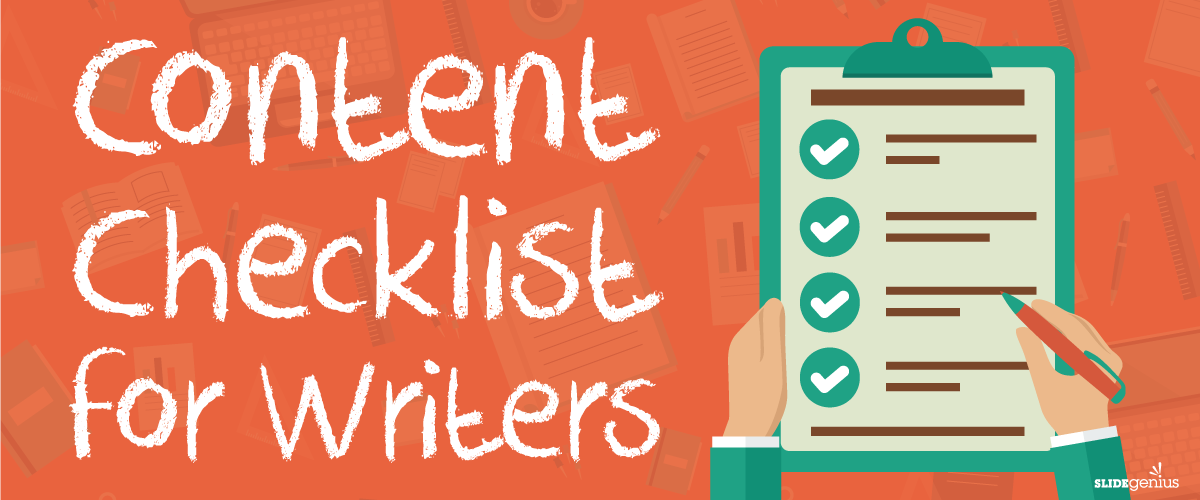
There are people who find writing a hard task. Some say there are too many rules on grammar or that they’re not confident about their pieces. The latter is a subjective matter; they would have to build their conviction first. The former, though, is the objectivity of the creative craft—the hardest part of it all, some will say. This is why writing is studied, why writing is an art, and why writing is not easy.When it comes to the rules of writing, there are certain aspects you really have to study—grammar, punctuation, and spelling are by far the most obvious when it comes to reading a draft. A mistake in any of the three can be a great blow to your great copy and an object of scrutiny for the author (perhaps why people are afraid to write in the first place).There are also the subtle points you need to fulfill. Like a few ones below. Familiarize yourself with all of them, and soon, you’ll be ready to write anything.https://www.slideshare.net/SlideGenius/content-checklist-for-writers

Put An Effort When Writing

Like every form of art, writing needs effort. If you don’t take it seriously—and that fact will show on your drafts—then don’t expect readers to do the same.Also, don’t be disappointed when your piece doesn’t live up to your expectations. Sure, you spent a significant amount of time and effort into it, but you can’t please everyone. If you’re trying to do that, then writing certainly isn’t the best craft. If you cater to too many interests, you’ll lose focus of why you’re writing and what you’re writing about.Lastly, have fun during the process. As in the infographic, if you force yourself to write, then it’ll become more and more of a chore. Then, you’ll place yourself into a creative slump—a writer’s block—and there’s only a downward spiral from there. If you need inspiration, inspire yourself. Need food to write? Buy some and satiate your hunger. Feel you can’t write without music? Play some tunes. Be creative.Need a writing prompt? Write about your interest… in a different way.Resources:Sambuchino, Chuck. “10 Tips for Writing.” Writer’s Digest. August 7, 2015. www.writersdigest.com/editor-blogs/guide-to-literary-agents/10-tips-for-writingScocco, Daniel. “34 Writing Tips That Will Make You a Better Writer.” Daily Writing Tips. n.d. www.dailywritingtips.com/34-writing-tips-that-will-make-you-a-better-writerWeinstein, Mindy. “One Colossal Content Checklist: 37 Tips For Writers.” Search Engine Journal. March 25, 2015. www.searchenginejournal.com/one-colossal-content-checklist-37-tips-writers/127122

5 Tips You Need to Apply for a Confident Presentation

books to improve presentation skills

Confidence

presentation

presentation tips

Rick Enrico

SlideGenius

The drive to do better exists in everyone, and excelling in presentation delivery is no exception.Yet it seems that developing confidence, a crucial part of delivery, takes a backseat. To make up for this, presenters just end up putting up a front.When confidence is just a mask, we eventually slip back to our old habits as soon as the situation that calls for it ends. You effectively stall your presentation skills and never hone real confidence as a result.You can apply confidence to many other areas in your life, so it makes sense to develop this important skill even outside the context of presentations.It takes a lot of hard work to become a confident presenter. Get a better look at yourself to see the areas that need your attention so you don’t have to fake it to make it.

1. Awareness

Total awareness of your habits and actions is the first step to knowing yourself better.Your body language reflects how you feel without you realizing it. Are you constantly shifting your gaze? Do you slouch? Are your hands constantly by your sides?These gestures don’t display confidence, so learn to change these habits.Connect with your audience and make them feel involved by establishing eye contact. Good posture will boost your confidence and make you look confident as a result.Use your hands to persuade your audience and emphasize points in your speech.

2. Observation

Charismatic people project confidence effortlessly.One of your favorite actors or actresses can serve as an inspiration to develop your presentation style.However, don’t imitate another person’s speech or delivery style to avoid looking unnatural.Be yourself, and the audience will react positively to authenticity which improves your audience engagement.

3. Authenticity

Introverts shouldn’t force confidence when they have to give a presentation.You can still be confident while staying true to yourself.It will take a lot of preparation and practice in order to mitigate anxiety, but the contemplative nature of introverts help them overcome their hang-ups faster in order to improve.Due to their limited energy reserves, it’s only crucial that they must plan their actions ahead.

4. Qualifiers

Do you fill in your speech with these words: might, probably, generally, kind of, and mostly?These words are called qualifiers, and the given examples above express doubt. Use will instead of might, or certainly instead of probably to create a strong and confident argument as necessary.It‘ll take some time, but speech habits and patterns can be corrected.

5. Expertise

There’s no single, true expert when it comes to reading body language. Nick Morgan, one of America’s top communication coaches, asserts that even you’re much better at reading the body language of people you know than any expert out there.Don’t overthink how others might interpret your gestures, but be aware that your true intentions can easily be picked up.This is why faking confidence can be an unreliable tip to follow. You’re constantly trying to be someone else and the audience only needs you to slip up once in order to see through your façade.Build trust by being confident in your own way.

Confident and Prepared

You should be a lot more relaxed now when you deliver your presentation. Confidence is all about the effort and hard work that you invest in yourself and expressing it naturally.These tips encourage you to build confidence in a way that will benefit you more in the long run. Don’t settle for a mask of confidence, temporary results don’t last.Build the right habits and take an honest look at yourself so you can let confidence flow within you.Once you’ve naturally grown more comfortable under your own skin, it will no longer be necessary to feign confidence.

References

Morgan, Nick. “7 Surprising Truths about Body Language.” Forbes. October 25, 2012. Accessed December 11, 2015. www.forbes.com/sites/nickmorgan/2012/10/25/7-surprising-truths-about-body-languagePerugia, Sarah. “Body Language at Work: How to Connect, Inspire and Project Confidence.””Qualifiers.TheGuardian. December 10, 2015. Accessed December 11, 2015. www.theguardian.com/women-in-leadership/2015/dec/10/body-language-work-project-confidenceWhite, Martha C. “4 Extremely Easy Ways to Fake Confidence.” Time. August 18, 2014. Accessed December 11, 2015. http://time.com/3131130/fake-confidenceWinch Ph.d., Guy. “10 Things Passive People Say.” Psychology Today. November 12, 2015. Accessed December 11, 2015. www.psychologytoday.com/blog/the-squeaky-wheel/201511/10-things-passive-people-sayFeatured Image: “Mountains nature sky” on freeuse.io

Are We There Yet?: How to Measure Marketing Success

business presentations

marketing tips

Rick Enrico

SlideGenius

successful marketing

Triumph may seem easy enough to identify, but there are actually different measures and indicators of marketing success.Don’t compare yourself to bigger and more established organizations’ achievements if you’re still starting out. Good marketing strategies take plenty of time to enact. Ultimately, they depend on the goals you’ve set and how long you’ve been going.But how do you really know if you’ve made it big? Here are three ways to make it easier to find out:

Set a Goal and a Timeline 

Like we’ve said, different businesses peak at different points. You can’t say you’re progressing or declining without definite proof.If you want to measure how well you’re doing your job, look at your goals. Maximizer.com recommends you think of them as the Key Performance Indicators of an effective marketing campaign.Some of the common KPIs to watch out for, according to Carolyn Edgecomb of Impact Branding and Design, are sales revenue, customer value, and conversion rate. But remember to measure your objectives alongside a specific timeline.How much return on investment do you expect after three months? After five years? Visualizing your goals this way makes it easier for you to track your improvement.Don’t expect to achieve everything overnight. You need to invest in your goals, and that effort takes time.

Know Where You Stand

One way to avoid unrealistic expectations is to know where you are in your marketing campaign.Looking at your target beside your current position makes it more realistic. That’s where your timeline comes in handy.At the end of every mark, see if you’ve reached the goal you set out with. This will let you know if you’ve attained a definite amount of success.But remember that progress is continuous. You have to strive for further growth once you’ve gotten to where you want to be.  One success should only generate more ambitious pursuits.Create new marketing strategies to address these. Development should only challenge you to keep on top of the competition.

End Action Rate

One way to avoid unrealistic expectations is to know where you are in your marketing campaign.Looking at your target beside your current position makes it more realistic. That’s where your timeline comes in handy.At the end of every mark, see if you’ve reached the goal you set out with. This will let you know if you’ve attained a definite amount of success.But remember that progress is continuous. You have to strive for further growth once you’ve gotten to where you want to be.  One success should only generate more ambitious pursuits.Create new marketing strategies to address these. Development should only challenge you to keep on top of the competition.

Conclusion

There are different indicators of a successful marketing campaign. It can be tricky to measure how well you’ve done with something that can seem so subjective.However, this also means you get to move at your own pace. Work steadily and diligently through your goals.Set a specific timeline that will help concretize your vision. What matters is that you prioritize your audience’s feedback to your promotions by monitoring their end action rate.Need help with your business presentations? Contact our SlideGenius experts today and get a free quote!

References

Edgecomb, Carolyn. “The 10 Marketing KPIs You Should Be Tracking.” IMPACT Branding and Design. March 1, 2013. Accessed October 22, 2015. http://www.impactbnd.com/the-10-marketing-kpis-you-should-be-tracking”End Action Rate.” Klipfolio. Accessed October 22, 2015. http://www.klipfolio.com/resources/kpi-examples/marketing/end-action-rate”Key Performance Indicators For Marketing Professionals – Maximizer Blog.” Maximizer Blog Key Performance Indicators For Marketing Professionals Comments. June 24, 2015. Accessed October 22, 2015. http://www.maximizer.com/blog/key-performance-indicators-for-marketing-professionals/Featured Image: “Success Key” by GotCredit on flickr.com

Cinematic Insight: Cutting to Continuity in Presentations

cinematic technique

continuity cutting

movies

presentation tip

Presentations

resource

Rick Enrico

SlideGenius

Continuity cutting is one of the most commonly used methods in filmmaking and editing. It’s associated with maintaining the flow of a scene or action sequence to preserve the illusion of reality on screen.Missing a small part of this technique can create lapses on a sequence of shots and angles, as well as frame size. In fact, even blockbuster movies fall victim to continuity errors, including Mel Gibson’s Braveheart.Simon Gallagher, Executive Director at What Culture, reviewed the said historical drama epic film and revealed movie goofs that might have been overlooked during the editing phase. One example is when a crew member was seen wearing a baseball cap at the back of the Scottish warriors.What’s the issue here? Sporty caps weren’t common yet in the 13th century, so this one badly compromised the period setting.This explains the importance of cutting to continuity. Failure to establish coherence between shots distorts the illusion of realism, causing audiences to express disbelief.

How Does it Relate to Presentations?

The purpose of continuity editing is to create smooth transitions between shots. Though this method is predominantly used in the film industry, it can also be applied in the context of presentations.If movie scenes are expected to run seamlessly, necessary cuts are likewise important in presentations to achieve a better delivery. The consistency of actors’ costumes, make-up, setting, and props in movies have equal importance with the messages and ideas conveyed in a presentation.Let’s delve deeper into continuity’s two transitional devices and how they’re associated to making professional speeches and presentations:1. CutawayIn film editing, a cutaway shot is an interruption of continuously filmed action by inserting a view of a secondary scene. For instance, a shot is focused in the dance performers on stage. Cutaways might consist of crowds, and cheering fans who are watching intently, applauding, and shouting for joy.These shots may not be a primary part of the main scene, but it helps aid the storytelling process.Cutaways can be equivalent to buffers inserted between topics in a presentation. Plugging in secondary information that’s not directly involved in your message helps build the story.In your presentation, giving out product information is a vital step in selling to prospects and customers. But this one can’t always guarantee you a new deal. That’s why, like a cutaway scene, it helps to skip shortly on the product details, and briefly talk about something else.For example, you can bring your audience’s attention to the challenge or situation they’re experiencing. Share scenarios that touch your customer’s concerns to make your message more relatable. This should be a problem that has not been addressed for them—or addressed well—yet.2. Cut-inAnother method used in cutting to continuity is cut-in. Unlike cutaways, cut-ins are close up shots of something visible in the main scene. They specifically show a part of the subject in detail.Let’s say the main shot is centered around the dancers performing on the stage. The cut-ins could be a close-up shot of a dance crew member. It could be his face, feet and anything that highlights the actual performance.What sets it apart from cutaway is that it focuses more on the parts of the main scene to create emphasis.This cinematic style also works in presentations, especially if you want to emphasize important points in your pitch. If the former suggests inserting points that are relevant to the main idea, this one prioritizes going in-depth with the subject matter.If you’re introducing your company’s newly launched product in a trade show, it’s ideal to demonstrate how it works. Go over all the product’s features and provide a little background information to make sure everyone is on the same page.

Perfect Take!

Cutting to continuity may have been a unique method associated with filmmaking and video editing. But when put into context, this technique can also be applied in public speaking stints.A controlled delivery of information is important in any kind of presentation, and that’s where continuity comes into play.You can either choose between cutaway and cut-in, or you can also apply both at the same time.Use cut-away when you want to condense an extended flow of action. This creates a buffer by sharing information that’s not directly involved with the subject but somehow relevant to it.Try applying cut-ins to highlight the primary purpose of your speech. Delve into the necessary points, no matter how small or big the idea is.Explore these film techniques and be amazed on how it helps you deliver your message!

References

“Continuity Cutting.” Integrated Publishing. n.d. Accessed January 26, 2016. http://photographytraining.tpub.com/14130/css/14130_328.htmGallagher, Simon. “10 Movie Mistakes You Won’t Believe Made It To Screen.” What Culture. November 5, 2012. Accessed January 26, 2016. http://whatculture.com/film/10-movie-mistakes-you-wont-believe-made-it-to-screen.phpOssohou, Eric. “The Art of Cutaway.” VideoMaker. February 1, 2008. Accessed January 26, 2016. www.videomaker.com/article/13850-the-art-of-the-cutaway

Frequently Asked Questions in a Business Presentation

FAQ

Frequently Asked Questions

Q&A

Rick Enrico

SlideGenius

Your Q&A with the audience is the best way for you to get feedback.Being offered feedback makes your presentation more engaging and helps your prospects get clarification from points you’ve made.Receiving feedback from your audience gives you insights on how you can make better presentations in the future.You won’t be able to cover every detail during your business presentation, so it’s important to always anticipate questions beforehand.

Question #1

What do you do?The beginning of your slide should be an introduction that contains your contact details and a brief primer to your company.But this kind of information isn’t enough for the audience to know what your business is all about.Your deck should cover every possible aspect of the purpose, service, and benefit that you provide while avoiding delays caused by an overly detailed discussion.If you have to re-explain your introduction towards the end of your business presentation, don’t assume that the audience just didn’t pay enough attention.This type of question could either mean that you didn’t spend enough time to explain your purpose, or that your audience simply wants to know more details.

Question #2

What’s your product?This question could be phrased in several ways: how this product benefits your prospects, how useful it is, and if it’s worth the investment. In other words, why should we choose you?You should be able to say yes to all the questions and provide concrete reasons to support your claims.Going over this type of question is good since this means that your audience is curious about your product.This is a way for you to slowly build up their trust. Knowing your product well adds to your credibility.Seal the deal by convincing your prospects that the product is worth their time and resources.

Question #3

How long does it take? This asks for specificity. It shows that the audience is thinking, How soon will I start seeing results?Provide a financial projection that gives a realistic assessment of your project.Tell them when they can expect to see results and only promise what you can deliver on time on a realistic budget.Scott Gerber, entrepreneur and angel investor, learned the hard way from being rejected by investors for his company.One of the most important lessons he learned was that VC’s that have seen it all can gauge the feasibility of your plans, so be realistic and avoid aiming for a multimillion investment without the experience to back it up.You’ll know how eager your audience is when you hear them ask about your project timetable.Being asked this at the end of your presentation usually means you’ve generated enough interest that’ll soon translate to sales.

Final Thoughts

Keep your answers short and concise since you’re towards the end of your presentation.Shorter answers are easier to remember and will help end your presentation on time.The responses you receive will help you gauge your own persuasiveness as a speaker.So don’t be content with a silent response, get the ball going by answering some of these questions by reiterating your main points.The success of your pitch depends on how well you respond to these FAQ’s.Don’t let the simplicity of these questions fool you, prepare how to answer them beforehand.

References

Gerber, Scott. “6 Steps to the Perfect Pitch.” Entrepreneur. May 21, 2009. Accessed January 5, 2016. www.entrepreneur.com/article/201826Pivovarov, Artur. “Presentation Skills. Unit 8: Dealing with Questions.” SlideShare. May 1, 2012. Accessed November 4, 2015. www.slideshare.net/ArturPivovarov/unit-8-12763217Featured Image: “WSIS Forum 2015 Final Brief” by ITU Pictures on flickr.com

Make Your Team Presentation a Combined Effort

Group Presentation

infographics

presentation delivery

resource

Rick Enrico

Team Presentation

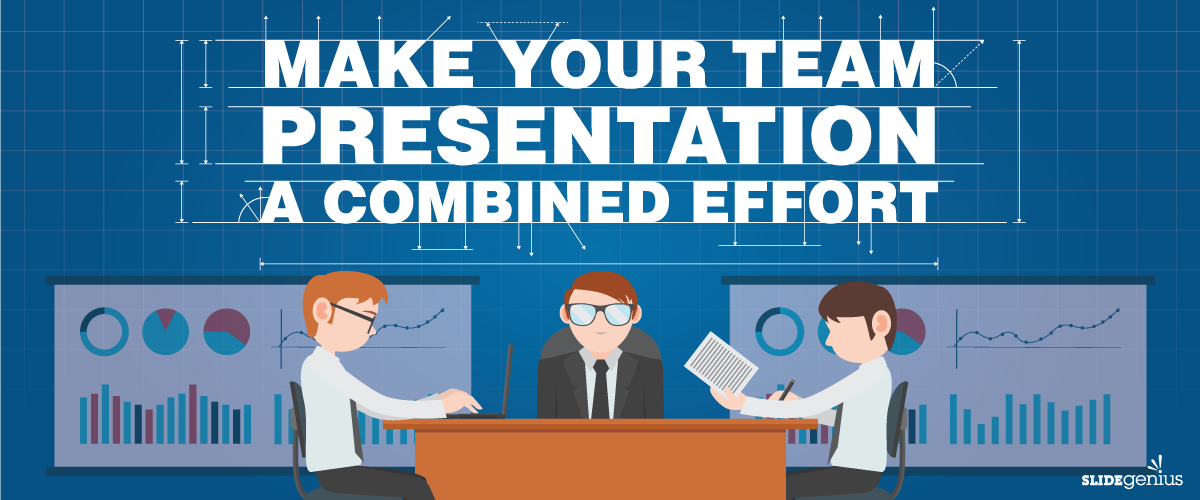
Behind every movie are hundreds of people working behind the scenes to get the project going from start to finish. You can say the same thing when it comes to presentations and pitches. Sure, you can create visually appealing PowerPoint slides (or let a presentation design agency do it) and deliver an effective speech, but do you have the technical know-how to arrange the lighting and sound of your stage? That’s when the cavalry comes in. But with all that back support, you’d still be alone in that platform.When you have more than just yourself up in front and speaking to an audience, the whole dynamic changes. It’s not just about you anymore; it’s about the team. There are a lot more considerations to think of and added tasks for the leader—you.Research suggests that a team does better than individuals at intelligence analysis. This isn’t just a specific niche, too. It is common thinking that two heads are better than one.While there are some who think otherwise and say that a great individual can outdo a good team, these are specific instances. Generally, though, there are reasons why being a team player is a sought-after trait: it fosters more than just a challenging atmosphere and encourages growth of more than one member in a shorter span of time, among others.Those same reasons apply to team presentations as well. You already have the pros, like teamwork; here are a few guidelines (in quotes!) to remember before sortieing your squad for the battle they’re assigned to win.https://www.slideshare.net/SlideGenius/make-your-team-presentation-a-combined-effortEven though you can pitch a presentation alone, don’t discount the power of a team behind you. Your individual members also feel the support of the whole team. This cyclic encouragement reminds you all that, sure, you can do it alone, but you can do it better when with other people. Humans are social beings. It makes sense for one to do—and be—better when in a social setting.If it brings out the best in you, do it. You’ve got nothing to lose. Who doesn’t want to be at their best? Just be careful not to get overconfident.

Presentation Tips for Introverts: Conserving Energy

introversion

introverts

presentation tips

public speaking

resource

Rick Enrico

saving energy

SlideGenius

Introversion isn’t the same as being shy.With enough preparation and focus, introverts are just as capable of being on stage as their more outgoing counterparts.Though being in the spotlight isn’t something they enjoy, it’s something they can excel at given the right time.It can also be draining to talk to a lot of people, so pace is important to keep things running smoothly.Your confidence will naturally grow as you master your topic.In addition, these presentation tips for introverts can help you further in your preparation.

Conserve Energy

While extroverts draw energy from social interactions, introverts draw their energy from within.Pacing is crucial to avoid wasting energy while presenting.If possible, craft a short speech to avoid running out of strength.A shorter presentation also means that you’ll have more energy to expend engaging with your audience.Prepare your deck thoroughly so you don’t fumble through your speech and lose your precious energy reserves.

Potential Power

Introverts are good listeners, but they can be good speakers as well.Here are more reasons why introverts can be excellent public speakers too.Overstimulation of their senses may cause them to withdraw in social situations.Thankfully, speeches aren’t completely spontaneous and are conducted in an organized space.Introverts can devote their time and energy to ensure an outstanding presentation, rather than rely on their personality to wow audiences.

Allocate Time

Use your strengths to conquer your weaknesses and you‘ll be a better presenter with practice.Devote some time to figure out how you can improve the way you speak and how you structure your topic.The focus should be on the message you’re trying to convey and not on you.This kind of mindset takes pressure off of you, which allows you to focus on your content and delivery.Pretending to be confident will work to your disadvantage because you’ll have to spend more energy trying to sustain this behavior.Your energy is better spent elsewhere, and the time you spend working on your strengths will give you more room for growth.

Energy = Power x Time

Proper pacing should make delivering a speech look a lot less frightening.Even if they feel up for to the task, introverts have the right skills to be in front of a crowd.But they have a limited amount of energy to spend and need to manage it carefully.Impress your audience through a message with a strong impact to alleviate the pressure to over-deliver.Some presentation tips suggest faking confidence, but it’s much better to spend time building up your strengths.With this, you’ll be true to yourself and the message you’re trying to get across through your deck.Remember: introversion should never be an excuse for a subpar performance. 

References

Cain, Susan. “Public Speaking for Introverts: 6 Essential Tips.” Duarte. February 1, 2013. Accessed October 23, 2015. www.duarte.com/blog/public-speaking-for-introverts-6-essential-tipsCherry, Kendra. “What Is Introversion?” About.com. Accessed October 23, 2015. http://psychology.about.com/od/trait-theories-personality/f/introversion.htmFeatured Image: “Shy statue.” by fredrik Andreasson on flickr.com

Your Business Checklist: What Should I Be Prioritizing?

business

Infographic

Rick Enrico

SlideGenius

tips

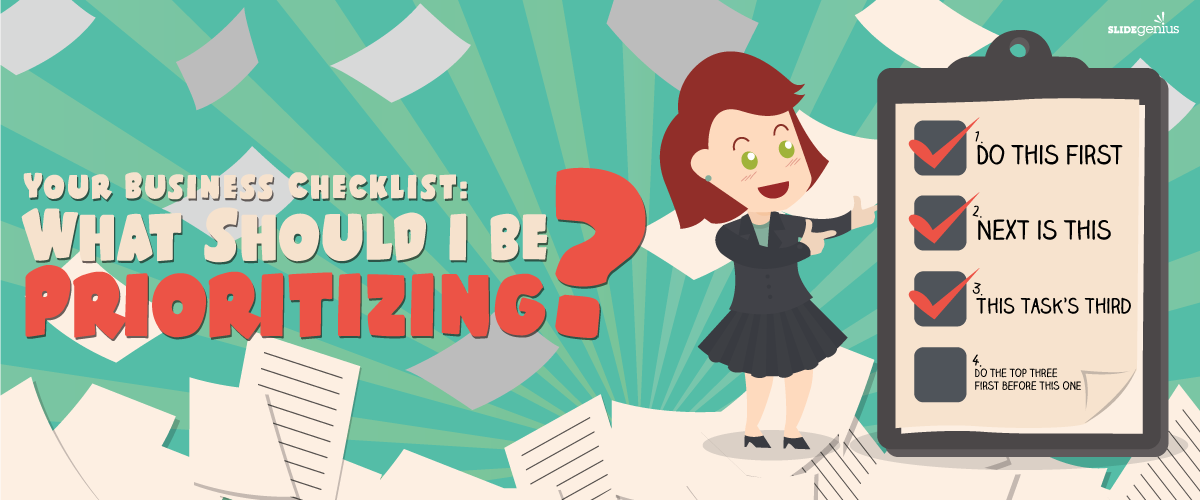
Before you started your business, one of the advices you have most likely heard is, “Know your priorities.” Even when growing up, adults would tell you the same thing. Wow, were they right.Knowing what your priorities are and setting them straight are more or less expected of you. Moreover, on a personal level, this is a testament of your excellence and character.In many ways, the same standards are applied to a business. You as the founder should know which tenet of your business to grow or improve upon. If you can get opinions and suggestions from other experts, then all the better because you could make an informed decision.These priorities become your responsibilities—goals toward a greater end. So you should make them work for you, and in turn, you should work hard for them.Have you identified what you need to work upon and what you need to do first? If you haven’t, this infographic has suggestions on what to prioritize. Check it out below.https://www.slideshare.net/SlideGenius/your-business-checklist-what-should-i-be-prioritizingWhat most thriving entrepreneurs forget, or worse ignore, is the caveat. Don’t bite off more than you could chew. There’s nothing more frustrating and time-consuming than having multiple priorities at once, having different sections of your company working towards different goals without utilizing each unit’s strengths and skill. Everything may fall apart piece by piece—or worse, all at the same time.Exercise patience when it comes to multitasking. Slow and steady win the race. Don’t put yourself in a position of, at the worst, bankruptcy because of too much work.There are balances when you started your business; more so now that you’re sailing at the helm of your enterprise, keeping your ship afloat. If you don’t want it to sink, be smart. Be cunning. Be confident.For more infographics on presentation, design, marketing, and business, head on to our SlideShare account. See you there!

Three Principles for a Minimalist PowerPoint Design

powerpoint designs

Powerpoint tips

presentation

Rick Enrico

slide deck

SlideGenius

Here are three key principles for creating a minimalist PowerPoint design, ensuring clarity, professionalism, and impact:

1. Limit Text and Focus on Key Points

  • Why it works: Minimalist design emphasizes brevity and clarity. Too much text on a slide can overwhelm the audience, distracting them from the key message. By limiting your slides to a few key words or short phrases, you help the audience stay focused and make it easier for them to follow along.
  • How to apply: Aim for one main idea per slide, and limit your text to 3-5 bullet points or short phrases. Use your verbal delivery to expand on these points.
  • Supporting examples: According to Garr Reynolds in Presentation Zen, less text on slides encourages better audience engagement because they are not reading off the slides but listening to the presenter.

2. Use White Space Strategically

  • Why it works: White space (or negative space) gives slides breathing room, helping important content stand out and preventing clutter. It ensures that each element on the slide has room to be easily noticed without visual competition.
  • How to apply: Space out text, images, and other elements, avoiding overfilling slides with too many objects. Use wide margins and ensure there is enough blank space around your key elements to enhance focus and readability.
  • Supporting examples: The use of white space is central to minimalist design in many fields, and according to the Nielsen Norman Group, white space improves legibility and allows the audience to better absorb information.

3. Choose Simple, High-Impact Visuals

  • Why it works: In minimalist design, visuals are used to reinforce the message, not distract from it. Choosing simple, high-quality images or icons that directly relate to your content will make your presentation more memorable and visually appealing without overwhelming the audience.
  • How to apply: Avoid decorative images or complex diagrams. Instead, use single, impactful visuals that support the key message. Keep images and icons consistent in style and color to maintain a cohesive look.
  • Supporting examples: A minimalist slide deck for sales pitches or corporate presentations often includes sleek, high-resolution visuals paired with limited text, focusing on the core message. Research from HubSpot suggests that using relevant images can increase audience comprehension and retention.

By applying these principles, you can create a clean, professional PowerPoint design that communicates your message clearly and powerfully.