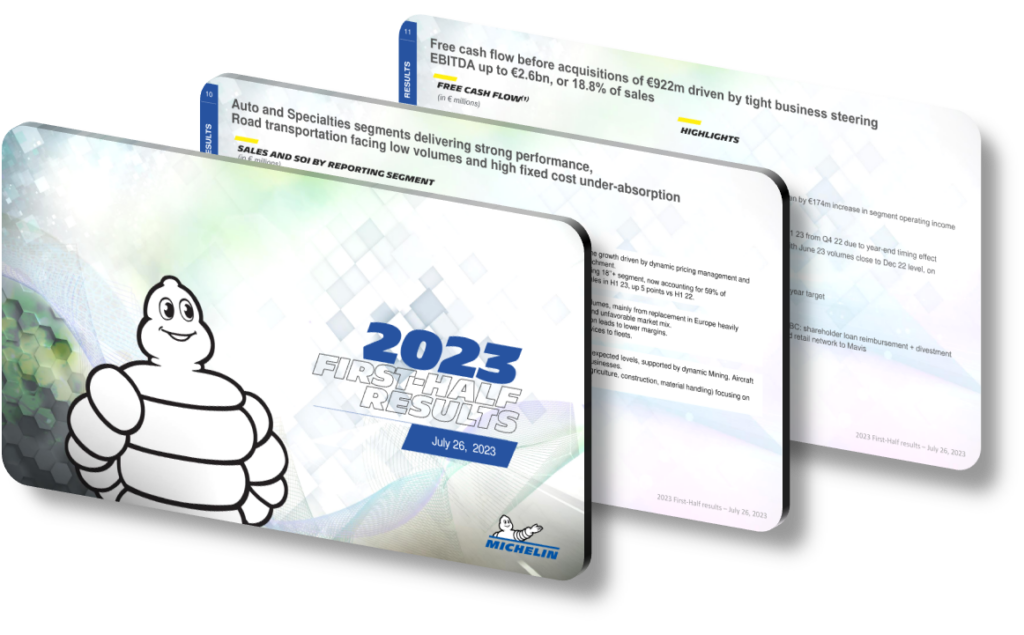
Michelin’s 2023 presentation design places strategic growth and innovation at the forefront because the company is actively communicating a long-term transformation story to multiple audiences simultaneously — investors, partners, regulators, and employees. When a global industrial group of Michelin’s scale publishes an annual or strategic presentation, the visual and narrative architecture is deliberately engineered to signal confidence, direction, and differentiation. By leading with growth metrics and innovation milestones, the presentation structure reinforces the idea that the organization is not merely sustaining its current position but actively expanding into new value territories, including sustainable materials, electrification-compatible tires, and high-tech services.
Presentation design at this level functions as a strategic communication tool, not just a reporting document. The choice to foreground innovation — such as bio-sourced compound development or connected mobility services — signals to analysts and stakeholders that R&D investment is generating tangible outputs rather than remaining speculative. Meanwhile, growth framing (showing revenue diversification, geographic expansion, and segment performance) reassures investors that the company’s core business remains robust even as it pivots toward future technologies. This dual emphasis — ‘we are strong today and building for tomorrow’ — is a classic investor-relations narrative structure that well-designed presentations use to manage perception across short-term and long-term horizons simultaneously.
A common mistake in corporate presentation design is separating financial performance data from innovation storytelling, which creates a fragmented impression. Michelin’s 2023 approach, by contrast, appears to deliberately weave these threads together, so that innovation outcomes appear as growth drivers rather than cost centers. For example, when a presentation shows specialty tire segments (such as those serving the aircraft or agricultural markets) growing in margin contribution while simultaneously highlighting new material science breakthroughs, it creates a coherent cause-and-effect narrative. Designers and strategists use visual hierarchy, color-coded segment maps, and timeline infographics to make these causal links immediately legible to viewers scanning rapidly during live presentations or investor days.
- Using a ‘strategy bridge’ slide early in the deck establishes a direct visual link between the 2022 baseline performance and the 2025 or 2030 target state, making growth claims feel grounded in real data rather than aspirational language.
- Color-coding business segments — such as distinguishing passenger tires from high-value specialty lines — helps audiences instantly recognize where margin expansion and innovation investment are concentrated within the portfolio.
- Including a dedicated innovation pipeline slide with stage-gate progress indicators (concept, prototype, commercial launch) signals organizational discipline and reduces investor skepticism about R&D productivity and timeline credibility.
- Placing ESG and sustainability metrics alongside traditional financial KPIs — rather than in a separate appendix — signals that environmental performance is integrated into the core growth thesis, not treated as a compliance afterthought.
- Using geographic heat maps to show market penetration rates across emerging regions (Southeast Asia, Latin America) quantifies growth opportunity in a way that raw revenue numbers alone cannot communicate to a general audience.
- Testimonial data points from named industry certifications or standards bodies — for example, specific EU regulation compliance milestones — add third-party credibility to innovation claims without requiring detailed technical explanations for general audiences.
- A closing ‘execution confidence’ slide featuring concrete near-term deliverables (such as a factory opening date or a product launch quarter) grounds the longer-range strategic narrative in accountability and near-term verifiability.
The practical takeaway is that Michelin’s 2023 presentation design reflects a deliberate choice to treat strategic communication as a competitive asset. If you are analyzing, adapting, or presenting about this material, the most valuable next step is to examine how the presentation sequences its evidence — where does innovation precede growth data, and where does it follow? That sequencing reveals the intended audience and the primary persuasion goal. Note, however, that this design logic applies primarily to investor-facing or multi-stakeholder contexts; internal operational presentations typically require a very different structure that prioritizes execution clarity over strategic narrative arc.
Need a presentation that wins the room? SlideGenius designs custom, high-impact decks for brands like Red Bull, Amazon, and Adidas. Browse our presentation design portfolio, explore our PowerPoint design services, or contact us for a free quote.