What are the key elements to include in a 3M investor presentation?

A 3-minute investor presentation — sometimes called an elevator pitch — must distill your entire business case into a focused, compelling narrative that gives investors just enough information to want a follow-up meeting. The key elements include: a sharp problem statement, your unique solution, the size of the market opportunity, a credible business model, a brief overview of traction or proof points, a snapshot of the team, and a clear, specific ask. Every second counts at this length, so each element must be ruthlessly prioritized — there is no room for vague claims, lengthy backstory, or unfocused storytelling.

The opening 20-30 seconds should be dedicated entirely to articulating the problem your business solves and why it matters right now. Investors hear hundreds of pitches, and the fastest way to lose their attention is to open with a company overview or a slide full of logos. Instead, ground them in a real, relatable scenario — for example, ‘Small warehouse operators lose an average of 23% of revenue annually to inventory mismatches they can’t detect until it’s too late.’ This kind of specific, data-backed framing immediately signals that you understand your market deeply and have done the research to back it up.

After establishing the problem, your solution and business model must be explained in plain language — avoid jargon that forces the listener to mentally translate your idea rather than evaluate it. A common mistake founders make is spending too much time on product features rather than the value delivered. Investors at this stage are not buying a product; they are buying a business outcome. Your business model explanation should answer: how do you charge, how frequently, and roughly what does a customer’s lifetime value look like compared to the cost of acquiring them? Even rough numbers — for instance, a $1,200 annual subscription with a 90% gross margin and a $180 customer acquisition cost — communicate financial literacy far more powerfully than general claims about scalability.

Traction is arguably the most persuasive element in a short pitch, because it replaces promises with evidence. In just a few sentences, highlight your most compelling proof points: paying customers, revenue run rate, pilot agreements with named organizations, month-over-month growth percentages, or waitlist size. If you are pre-revenue, lean on validated learning milestones — completed user interviews, a working prototype tested with 50 beta users, or a signed letter of intent from a prospective enterprise client. These details demonstrate momentum and reduce perceived risk for the investor evaluating whether to spend more time with you.

  • Start with a single, vivid problem statement backed by a specific statistic or real user scenario to immediately establish credibility and relevance with your audience.
  • State your solution in one or two plain-language sentences, focusing on the outcome it delivers for customers rather than the technical features that power it.
  • Quantify your market size using bottom-up reasoning — for example, ‘400,000 independent dental clinics in the US, each spending roughly $8,000 per year on scheduling software’ — rather than citing generic top-down TAM figures.
  • Describe your business model with at least one concrete number, such as average contract value, gross margin percentage, or payback period, to show financial fluency.
  • Share your single strongest traction metric — whether that is $15,000 MRR, 2,000 active users, or a signed pilot with a regional hospital network — to anchor the pitch in reality.
  • Introduce your team by highlighting the one or two credentials most directly relevant to the problem you are solving, such as 10 years in supply chain logistics if that is your domain.
  • Close with a precise ask — for example, ‘We are raising a $750,000 pre-seed round and have $400,000 committed; we are looking for two more investors at $175,000 each’ — so the investor knows exactly what you need.

A 3-minute investor presentation works best in contexts like pitch competitions, demo days, cold introductions at networking events, or the opening of a first Zoom call before you transition to a longer deck. It is not the right format for a Series B diligence meeting or a partnership negotiation where depth is expected from the start. After you deliver it, the immediate next step should be to send a one-page summary or a 10-slide deck within 24 hours while you are still top of mind. Practice your pitch aloud at least 15 times — timing yourself — so that pacing and confidence feel natural rather than rehearsed under pressure.

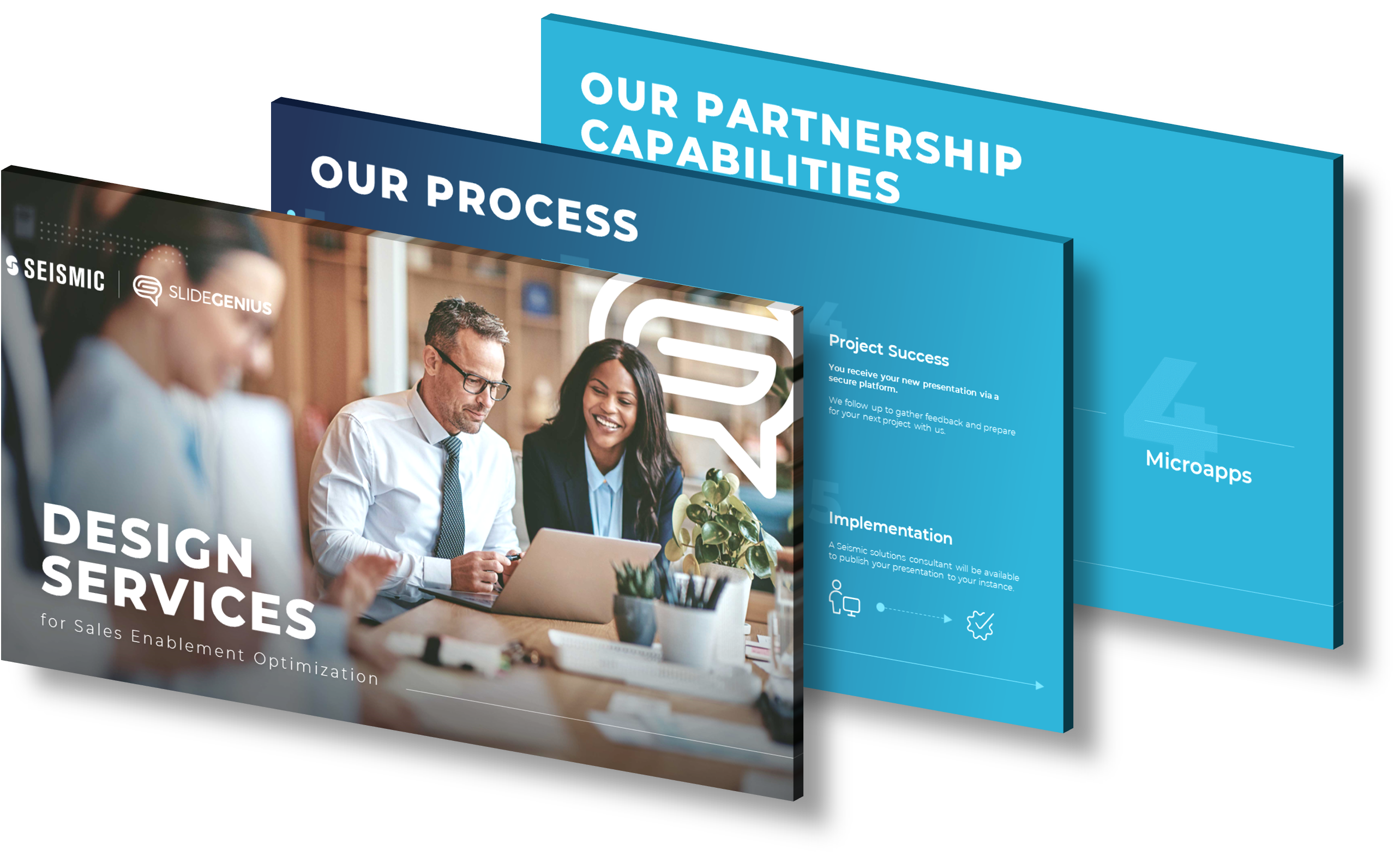
Need a presentation that wins the room? SlideGenius designs custom, high-impact decks for brands like Red Bull, Amazon, and Adidas. Browse our presentation design portfolio, explore our PowerPoint design services, or contact us for a free quote.

Ready to kick off your project?

Fill out the form below to speak
with a SlideGenius representative.